

Lisinopril is an ACE inhibitor used to treat high blood pressure, chronic heart failure, and some patients after myocardial infarction. It is also used in selected patients with diabetic kidney involvement, with treatment tailored to the clinical situation and kidney function.
Review current lisinopril options through a pharmacy page that clearly explains product details and order requirements.
Check the listed strength, prescription process, and delivery terms before placing an order.
For anyone researching lisinopril mail order, the most important points are legitimacy of the pharmacy, prescription handling, dose verification, and safety monitoring. This medicine is commonly taken once daily, but it still requires careful review of contraindications, interactions, blood pressure response, and kidney-related lab values.
What lisinopril is used for
Lisinopril helps relax blood vessels, which lowers blood pressure and reduces strain on the heart. In routine practice it is used for hypertension, chronic heart failure, and in some treatment plans after acute myocardial infarction. It may also be part of care for certain patients with diabetic nephropathy when kidney protection is a treatment goal.
Its once-daily use is one reason it remains widely prescribed. Even so, suitability depends on the patient’s medical history, kidney status, current medicines, and the reason it is being prescribed.
How lisinopril is typically taken
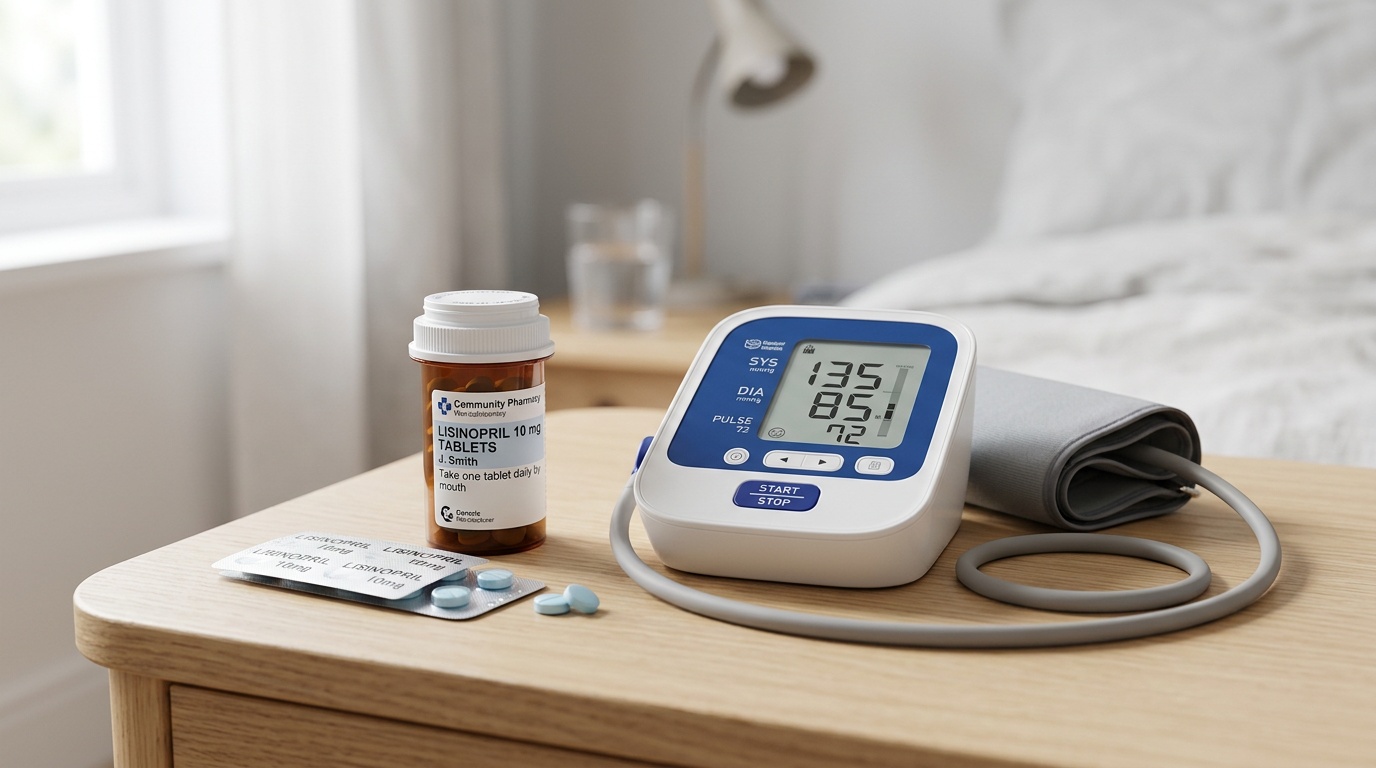
Lisinopril is taken by mouth once daily, with or without food, preferably at the same time each day. The tablets listed in this brief include 2.5 mg, 5 mg, and 10 mg strengths, and the prescribed dose is usually adjusted according to treatment response and tolerability.
The brief describes a common starting dose of 10 mg daily, with maintenance often in the 10 mg to 20 mg range and higher doses used when clinically appropriate. Patients already using diuretics may need a lower starting dose to reduce the risk of excessive blood pressure drop.
Dose changes should follow the prescriber’s instructions rather than self-adjustment. Product labeling and patient information should be reviewed whenever treatment is started, restarted, or changed.
- Take it once daily at a consistent time.
- Use the exact strength and directions on the prescription label.
- Do not stop treatment abruptly without medical advice.
- Ask a clinician or pharmacist before changing dose timing with other blood pressure medicines.
What to check before choosing a lisinopril mail order source
When comparing lisinopril mail order options, focus on pharmacy legitimacy and process transparency rather than marketing claims. A reliable pharmacy should clearly identify its operating details, explain checkout requirements, and provide access to a pharmacist or support team for medication questions.
It is also sensible to confirm the listed product strength, packaging details, and the exact medicine being dispensed before completing an order. If you are ordering for the first time from a new source, careful verification matters more than convenience.
- Confirm that the pharmacy is properly licensed or accredited for its market.
- Check whether prescription review or transfer is required before dispensing.
- Match the ordered strength to your current prescription.
- Be cautious with unusually low prices or unclear product sourcing.
- Review the pharmacy’s contact options and pharmacist availability.
- Inspect package labeling when the order arrives.

Prescription and clinical review considerations
Although online ordering can simplify refills, lisinopril is a medicine that should be used under clinician oversight. Prescriber review is especially important at treatment initiation, after dose changes, when adding diuretics or other antihypertensives, and when kidney function is reduced.
A clinician may review recent blood pressure readings, kidney function, and potassium levels before continuing therapy. This is particularly relevant for patients with heart failure, diabetic kidney disease, prior low blood pressure episodes, or a history suggesting higher risk of adverse effects.
- Keep an up-to-date medication list for checkout or review.
- Report any past angioedema or ACE inhibitor allergy.
- Discuss kidney disease, dehydration, or recent illness before refill approval.
- Use official prescribing information and the patient leaflet for reference.
Key safety points and who may need extra caution
Lisinopril is not appropriate for everyone. The brief lists contraindications such as hypersensitivity to lisinopril or other ACE inhibitors, a history of angioedema, pregnancy, breastfeeding, primary hyperaldosteronism, cardiogenic shock, certain valve disorders, and severe renal impairment in the stated context.
Blood pressure can fall too much, especially early in treatment or when lisinopril is combined with diuretics. Monitoring may also be needed for creatinine and potassium, since increases can occur during therapy. Dizziness, weakness, and dry cough are recognized adverse effects, and swelling of the face, lips, tongue, or throat requires urgent medical attention.
- Avoid use during pregnancy and breastfeeding unless specifically directed otherwise by a qualified clinician.
- Use caution if you have kidney disease or take other medicines that affect potassium.
- Seek urgent care for signs of angioedema or severe allergic reaction.
- Consult a clinician if cough, severe weakness, or marked dizziness develops.

Medicines and habits that can affect treatment
Treatment decisions should take into account other blood pressure medicines and any therapy that may increase the risk of hypotension, kidney stress, or changes in potassium. The brief notes that lisinopril is often used with other cardiovascular medicines, but combination therapy still requires individualized monitoring.
Alcohol may intensify the blood pressure lowering effect and make dizziness more likely. Because concentration and reaction time can be affected in some patients, extra care may be needed with driving or similar tasks when starting treatment or after dose changes.
- Tell your prescriber about diuretics, beta-blockers, calcium channel blockers, and nitrates.
- Ask before combining lisinopril with supplements or medicines that may alter potassium.
- Limit or avoid alcohol if it worsens lightheadedness.
- Be cautious with driving until you know how the medicine affects you.
Practical questions about ongoing use
Mail order can be useful for repeat therapy, but the medicine still needs the same checks as any local pharmacy fill. Refill convenience does not replace clinical follow-up, dose confirmation, or lab monitoring when those are recommended.
If you are considering a new supplier, compare how the pharmacy handles prescription processing, support access, product labeling, and delivery terms rather than relying on promotional language alone.
Common questions about Lisinopril
Can lisinopril be ordered online safely?
It can be ordered through a legitimate pharmacy process, but safety depends on proper prescription handling, correct product verification, and ongoing clinician oversight.
What dose of lisinopril is usually prescribed?
Dose varies by condition and patient factors. The brief describes common use starting at 10 mg daily, with lower starting doses in some patients such as those taking diuretics.
What should be monitored while taking lisinopril?
Blood pressure, kidney function, and potassium may need monitoring, especially after starting treatment, changing dose, or using other interacting medicines.
When should medical advice be sought urgently?
Urgent care is needed for facial or throat swelling, severe allergic symptoms, or a major drop in blood pressure with concerning symptoms.